
Once upon a time there was a website called "overthrow.com". It was a project of "Bill White", who was recently sentenced to do a great deal of time after allegedly sending email threats following a raid on an Osceola compound of American Front, where paramilitary training for race war was said to be occurring.
Back in the day, soon after the Columbine school shooting, Overthrow.com put out recommendations to American students involving violence.
Web Site Asks Youths to Carry Weapons, Build Bombs
10.29 a.m. ET (1429 GMT) May 1, 1999
By Sarah Tippit


A Web site urging young people to carry weapons, build bombs, blow up
their schools, kill the football team and laugh while doing so is just a
click away from anyone with access to a computer.

Information-packed www.overthrow.com, which says it is run by a
youth-oriented, anti-government movement called the Utopian Anarchist
Party, features articles telling young people how runaways can conceal
weapons by wearing coats, build bombs and mix illegal drugs.

It says schools and juvenile psychiatric centers that prescribe
anti-depressants are evil and should be destroyed, and it gives a list
of "Music to Shoot Your School Up By."

There are so many parallels between the Web site's message and the April
20 massacre in Columbine High School in Littleton, Colorado, that some
police hate-crime experts say privately it is not inconceivable that the
two teen-age gunmen in that case visited the site.

FBI officials in Denver were unable to confirm that the Web site had any
connection to the shooting.

The creator of www.overthrow.com, 21-year-old William White of
Gaithersburg, Maryland, told Reuters he would neither confirm nor deny
that a "Colorado cell" of the Utopian Anarchist Party had been in
contact with the teen-agers responsible for the shooting, in which 15
people, including the gunmen, died.

"The reason (the Columbine victims) got killed is that they are part of
an authoritarian social movement and were seen by the killers as
symbolic of that movement," White, who described himself as an anarchist
since junior high school, told Reuters.

"What the shooters were shooting at was not people but the movements
they symbolized. It's a shame that authoritarian Christians, who are
trying to dominate our society, don't have a clue how objectionable they
are until people start shooting them," he said in a telephone interview.

White said his group did not target a specific group but sought to
"annihilate" authoritarian systems with "shifting rules to fit the
moment." He said these systems ranged from public schools and juvenile
psychiatric centers to police departments and the media.

He called President Clinton an "authoritarian communist" who "should be
removed from office."

"I am angry we are living in a system that excuses murder in one place
and demands solemnity in another, that manufactures reality, that
manufactures morals, that twists the truth (to suit the moment)," White
said.

He said visits to his Web site had increased fivefold since the shooting
in Littleton. "We have gone from 4,000 visitors a day to a peak of about
50,000 a day," he said. "If it continues ... it will be more like the
1.5 million-hits-per-month range," he said.

Rabbi Abraham Cooper, associate dean of the Simon Wiesenthal Center,
which monitors hate Web sites, said their number had skyrocketed in the
last month.

"On April 19, 1995, the day of the Oklahoma City bombing, there was one
hate Web site on the Net," Cooper told Reuters.

"Our new study on April 1 lists 1,426 hate Web sites," he said, many of
which target children and, thanks to the ease of new technology, are
easily created by teen-agers.

"We're now at the end of April, and we're at 1,600 sites," he said, an
increase of nearly 200 hate-oriented sites in less than a month.

Cooper said it was not inconceivable that the Littleton shooters saw the
Web site before their rampage. His researchers saw it several weeks ago
and noted that "Music to Shoot Your School Up By" had been posted for at
least a few weeks before Littleton, he said.

Conservative talk show host Michael Reagan, who also drew a parallel
with the Littleton shooting, said the site's existence should, at a
minimum, be a wake-up call to parents who are not aware what people or
groups their children are contacting on the Internet.

"It's like having a support group that says, 'Yes, if that's what you
want to do, hey, we've got all kinds of people here ready and willing
and able to support you in your efforts to kill and maim,"' Reagan told
Reuters.

White said the site's references to bomb-making and drugs were meant to
attract young people for indoctrination into a political movement.


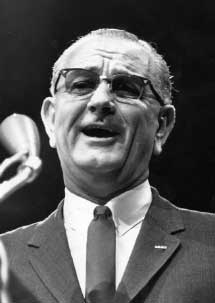 Most churches in America have organized as "501c3 tax-exempt religious organizations." This is a fairly recent trend that has only been going on for about fifty years. Churches were only added to section 501c3 of the tax code in 1954. We can thank Sen. Lyndon B. Johnson for that. Johnson was no ally of the church. As part of his political agenda, Johnson had it in mind to silence the church and eliminate the significant influence the church had always had on shaping "public policy."